macOS includes security and privacy controls that protect access to data stored on your Mac, including iPhone backups.
One such measure means that to access, view or extract data from an iPhone backup on your Mac, apps require permissions. For this reason, to use iBackup Extractor to extract photos, contacts, messages and more from your iPhone backup, you'll firstly need to give permission. This article will show you how.
How to allow iBackup Extractor to access your iPhone backups on Mac
Open System Settings, then go to Privacy & Security > Full Disk Access.
Click the + button. If prompted, enter your password or use Touch ID to allow changes.
Select iBackup Extractor and click Open to grant Full Disk Access.
Close System Settings and open iBackup Extractor to view your iPhone backup content.
On macOS Monterey and earlier, these settings are found in System Preferences rather than System Settings.
Open the Launchpad from your Dock and launch System Preferences.
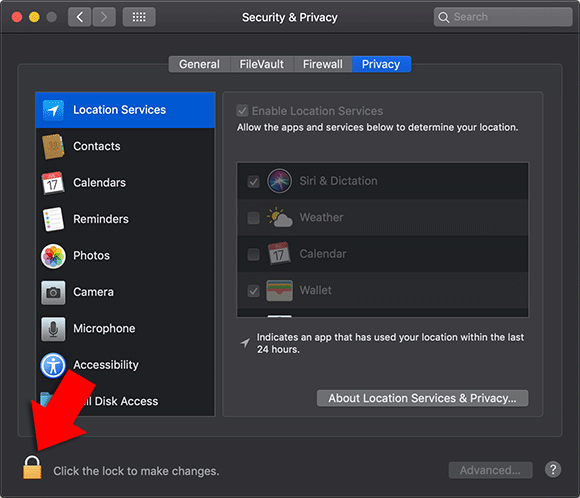
Click Security & Privacy. Before you can make changes, you may need to click the lock icon at the bottom of the window and enter your password.
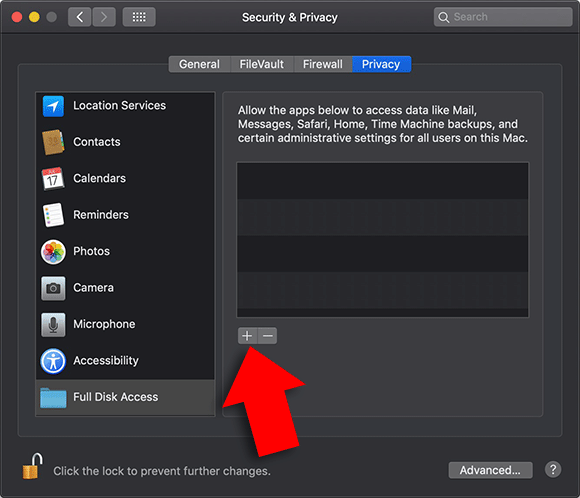
Select the Privacy tab, then choose Full Disk Access.
Click the + button. You may need to enter your password before you can make changes.
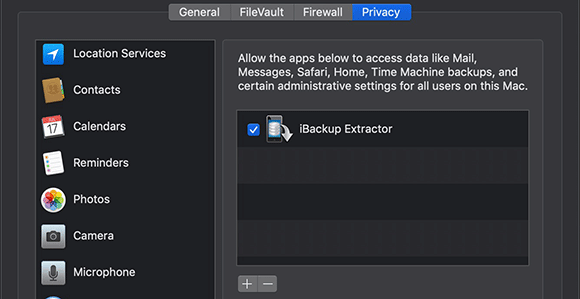
Find iBackup Extractor in the list of applications, select it and click Open. This gives iBackup Extractor permission to access your iPhone backups.
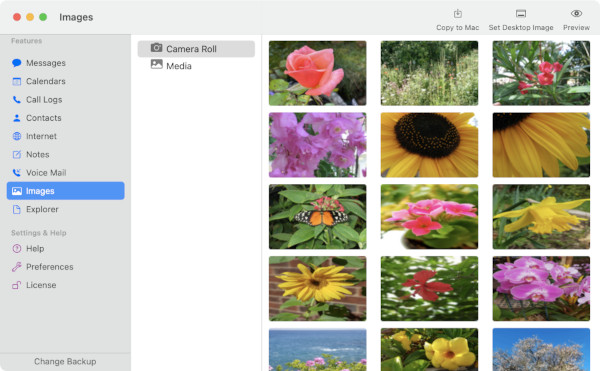
You can now close System Preferences and open iBackup Extractor. The software should locate your iPhone backups and allow you to browse and extract their content.
Privacy note: iBackup Extractor does not use Full Disk Access to upload, store or share your personal data. This permission simply allows the software to access iPhone backup files stored on your Mac so you can browse and extract the data you need.
We use cookies to provide you the best experience on our website. To find out more, read our cookie policy. You may decline non-essential cookies if you prefer.
We use cookies to track usage and optimize your experience.